
You wash your face every morning, apply your serums, and rarely skip moisturizer. Yet the person looking back at you in the mirror still seems tired, flat, and lacking clarity. Before assuming your products aren’t working, it’s worth understanding a more fundamental issue: your routine may be doing exactly what it’s designed to do, and it still isn’t enough to overcome certain biological realities.
Can chemical peels treat dull skin on areas other than the face?
Yes. Some providers offer body peels that effectively address dull, photo-damaged, or uneven skin on the décolletage, hands, back, shoulders, and buttocks.
The Real Reasons Behind Dull Skin
The most overlooked contributor to dull skin causes is the natural slowdown of cellular turnover. In your twenties, the skin renews itself roughly every 28 days. With age, that cycle stretches to 45 days or longer. The practical consequence is that older, rougher cells linger on the surface well past their expiration, creating the flat, grayish appearance many people associate with fatigue or aging. This is the core of why does my skin look dull even when a routine appears solid on paper.
Dead skin cell buildup compounds the problem. As cells accumulate on the surface, the skin’s ability to reflect light diminishes. Luminosity isn’t a product of hydration alone; it depends on a reasonably smooth, even surface. Thickened skin, regardless of how well-moisturized it is, will absorb and scatter light rather than reflect it.
Pigmentation irregularities add another layer. Sun exposure, post-acne marks, and hormonal shifts can all produce uneven skin tone that dulls overall clarity. These are not surface-level issues that a toner or brightening serum can fully correct on their own.
What Topical Products Cannot Reach
At-home skincare is genuinely useful for maintaining the skin’s barrier, delivering antioxidants, and providing daily hydration. However, over-the-counter formulations are kept at concentrations safe for unsupervised daily use, which limits how deeply active ingredients penetrate and how significantly they can modify the skin’s behavior at a structural level.
A retinol applied nightly will encourage turnover gradually. A glycolic acid toner will loosen surface bonds incrementally. For individuals dealing with more established dull skin causes, these incremental improvements rarely produce the visible clarity they’re hoping for. This is the specific gap that professional-grade treatments are designed to fill.
How Chemical Peels Address the Problem Directly
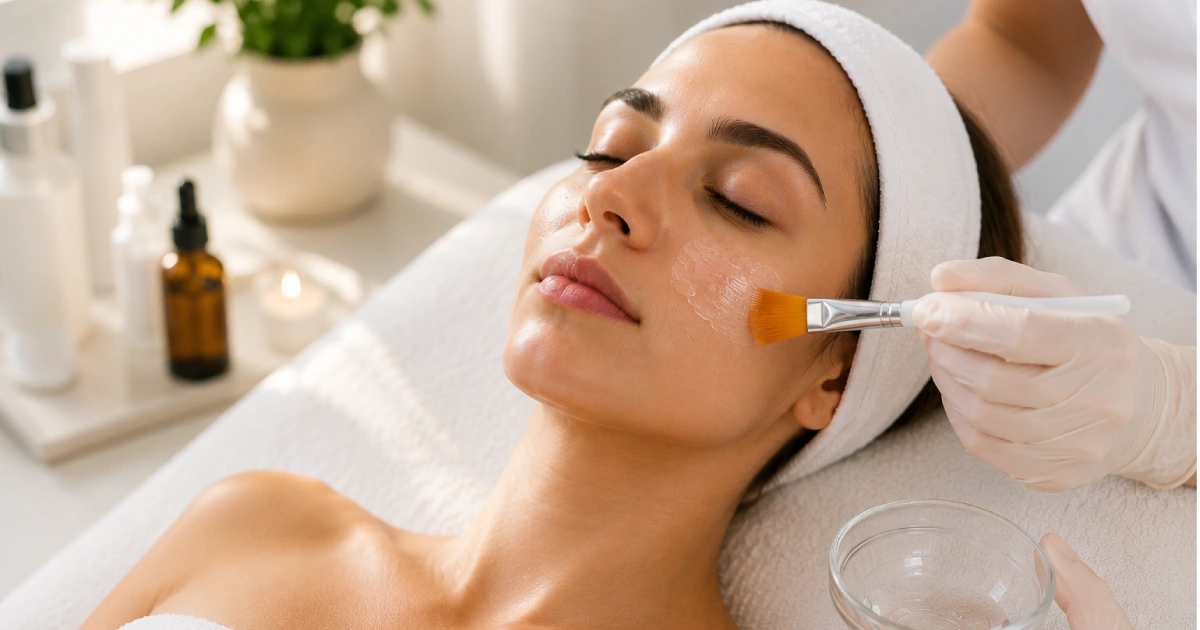
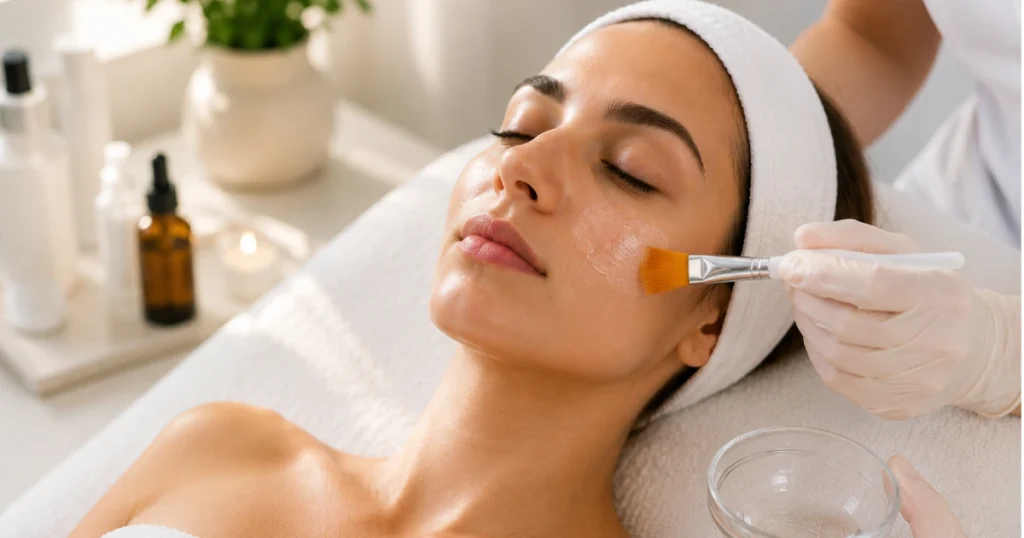
A chemical peel works by applying an acid solution to the skin at a controlled concentration and depth, deliberately accelerating desquamation and prompting the skin’s renewal mechanisms. Unlike daily exfoliants, professional peels create a more precise and complete response in a single session.
The chemical peel benefits operate on several levels. At the surface, clearing accumulated dead cells restores the reflectivity that dead skin cell buildup had suppressed, producing visible skin texture improvement. Beneath that, the controlled exfoliation signals the skin to generate fresh keratinocytes, resetting a turnover cycle that may have slowed considerably with age or environmental exposure.
For pigmentation concerns, certain formulations interfere with melanin pathways and accelerate the shedding of pigmented cells, making them a clinically sound approach to uneven skin tone treatment. At medium depth, peels stimulate collagen synthesis in the upper dermis, qualifying them as a genuine skin rejuvenation treatment rather than simply an advanced form of exfoliation.
Chemical Peel Options and How They Address Dull Skin
Not every peel works the same way, and the right option depends on how deeply your skin concerns are rooted. The Alchemy Clinic in Manchester, NH, offers three treatment categories, each suited to a different presentation of dullness and skin damage.
Light Chemical Peels
These work at the outermost layer of the epidermis, targeting dead skin cell buildup that accumulates when the skin’s natural shedding cycle slows. Options include the ZO Stimulator Peel and Environ Cool Peels. Both are well-tolerated with minimal downtime, making them a practical starting point for patients whose dullness presents as general flatness or reduced surface clarity.
The best option is determined during your evaluation to ensure the treatment fits your specific skin type. For patients newer to professional exfoliation, this category of dull skin treatment offers a controlled introduction to the renewal process.
Medium Depth Chemical Peels
These formulations reach beyond the epidermis into the dermis, producing more substantial improvements in skin texture improvement and uneven skin tone treatment. These are well-suited for persistent sun damage, uneven pigmentation, or early aging signs.
Available options include the ZO 3-Step Peel and VI Peels, both customizable to your skin concerns. Recovery averages 7 to 10 days. The ZO 3-Step Peel specifically requires a 4 to 6 week retinol preparation period beforehand — a step that improves the evenness of the skin’s response and reduces pigmentation risk. Patients who complete this preparation phase consistently see more predictable results.
Body Peels
The last chemical peel option brings medium-depth treatment to areas beyond the face. Photo-damaged, acne-prone, or persistently dull skin on the décolletage, hands, back, shoulders, and buttocks can all be addressed with this option. Recovery follows a similar 7 to 10-day timeline. Some patients have uneven skin tone or texture concerns that extend past the face. In such cases, the body peels offer the same clinical precision applied in a broader treatment area.
Setting Accurate Expectations
Getting the most out of a chemical peel requires more than just the treatment itself.
- Plan for a series, not a single session — Sustained results depend on multiple treatments over time.
- Commit to at-home maintenance — Consistent skincare between sessions supports lasting results.
- Protect skin from sun exposure — Post-treatment skin is more UV-sensitive; skipping SPF undermines results.
- Prime skin before medium-depth peels — A retinoid or melanin-inhibiting agent can lower the risk of post-inflammatory hyperpigmentation, especially in deeper skin tones.
- Know the contraindications — Active skin infections, certain medications, and systemic conditions may rule out treatment.
- Get a proper consultation — Only a clinical evaluation confirms a peel is safe and right for your skin.
Frequently Asked Questions
What causes dull skin even with a consistent skincare routine?
Dull skin is often the result of slowed cellular turnover, dead skin cell buildup, and uneven pigmentation.
How do chemical peels improve skin texture and radiance?
Chemical peels accelerate the removal of accumulated dead cells and stimulate the skin’s renewal cycle.
Which chemical peel is right for my skin type?
The most appropriate peel — whether a light option like the ZO Stimulator Peel or a medium-depth treatment like the VI Peel — is determined during a personalized skin evaluation at The Alchemy Clinic.
Chemical Peels at The Alchemy Clinic in Manchester, NH
For those exploring chemical peels in Manchester, NH, The Alchemy Clinic provides a personalized approach beginning with a skin assessment that identifies each patient’s specific contributing factors, including skin type, tone, and existing conditions.
Chemical peel treatment for dull skin in Manchester, NH, that our team provides can be applied to the face, neck, hands, and décolletage, addressing sun damage, acne-related concerns, aging signs, and uneven skin tone treatment across each area. Results are generally visible within a week, with continued improvement as the skin’s renewal cycle progresses. Longevity varies by peel depth and skin type, but outcomes typically hold for several months. Our practice works with each patient to determine a maintenance schedule suited to their long-term goals.
Book your chemical peel consultation at The Alchemy Clinic in Manchester, NH!